
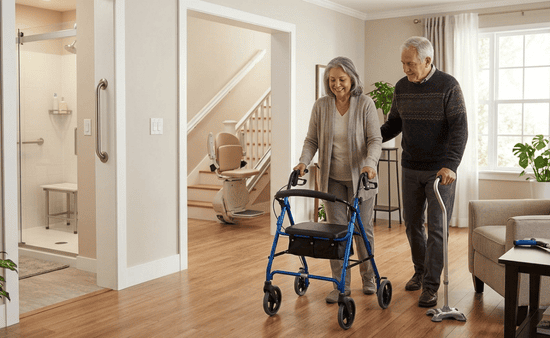
Most people want to age in their own homes for comfort and independence, but physical changes can make this difficult. Mobility challenges can turn a familiar house into a space full of obstacles, such as stairs that are hard to climb or bathrooms that present slipping hazards.
What Does “Aging in Place” Really Mean?
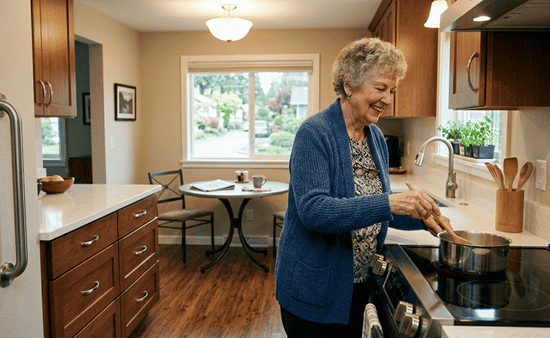
Aging in place simply means choosing to live in your own home safely and independently as you get older, rather than moving to a residential care facility.
The benefits of this choice go beyond simple comfort. Staying in a familiar community allows seniors to maintain established social networks, keep regular routines, and preserve their personal autonomy. By implementing the right modifications early, individuals can create a supportive environment that adapts to their changing physical abilities.
Common Mobility Challenges for Seniors
As the body ages, several physical changes can impact a person’s ability to move around their home safely. Recognizing these issues is the first step toward finding the right solutions.
Decreased Balance and Strength
Muscle mass naturally decreases with age. This loss of strength, combined with changes in the inner ear, can lead to poor balance. These factors significantly increase the risk of falls inside the home.
Joint Pain and Arthritis
Stiff and painful joints make everyday movements challenging. Arthritis can turn simple tasks like turning a doorknob, stepping over a bathtub threshold, or climbing a flight of stairs into painful ordeals.
Vision and Hearing Impairment
Reduced eyesight and hearing make it harder to perceive spatial hazards. Poor depth perception can make stairs dangerous, while low lighting can hide tripping hazards on the floor.
Home Modifications for Enhanced Mobility
Updating the physical structure of a home is one of the most effective ways to support an aging resident. Small and large changes can drastically improve daily safety.
Entryways and Exits
Getting in and out of the house safely is vital.
- Ramps and Stairlifts: Installing gently sloping ramps at the front door eliminates the need to navigate steps. Inside, stairlifts can transport an individual between floors safely. If stairs become entirely impassable, you might even consider a home elevator — available in Salt Lake City, UT, and similar specialized mobility options in your local area.
- Wider Doorways: Standard doorways are often too narrow for walkers or wheelchairs. Widening these entryways ensures smooth passage from room to room.
Bathrooms
The bathroom is typically the most dangerous room in the house due to wet, slippery surfaces.
- Grab Bars and Non-Slip Surfaces: Securely anchored grab bars near the toilet and inside the shower provide crucial stability. Non-slip mats or floor treatments prevent dangerous slips on wet tiles.
- Walk-in Showers and Tubs: Removing the high step-over threshold of a standard bathtub greatly reduces fall risk. Walk-in showers with bench seating offer a much safer bathing experience.
- Raised Toilet Seats: Adding a few inches of height to the toilet makes sitting down and standing back up much easier on the knees and hips.
Kitchens
A safe kitchen allows seniors to prepare their own meals without straining.
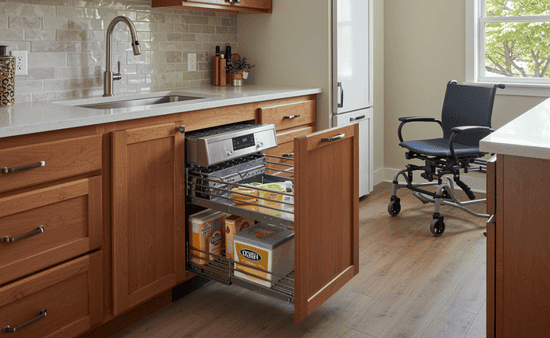
- Accessible Storage: Moving frequently used items to lower shelves prevents dangerous reaching and climbing on step stools. Pull-out pantry shelves bring items directly to the user.
- Ergonomic Appliances: Drawer-style dishwashers and front-control stoves reduce the need to bend over or reach across hot burners.
Living Areas
Simple adjustments in the living room can prevent accidents.
- Decluttering and Furniture Arrangement: Remove loose throw rugs, which are major tripping hazards. Arrange furniture to create wide, clear walking paths.
- Appropriate Lighting: Increase the wattage of lightbulbs and add rocker-style light switches. Motion-sensor lights in hallways are excellent for safe nighttime trips to the bathroom.
Assistive Devices for Daily Living
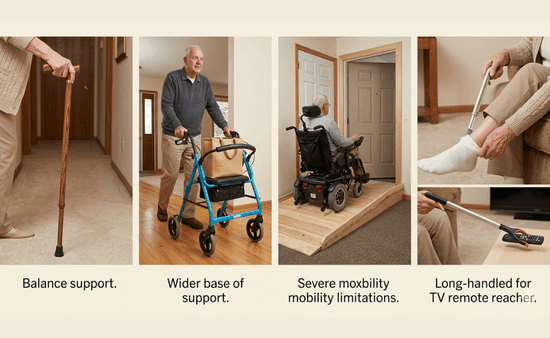
When home modifications are paired with personal assistive devices, mobility improves significantly.
Canes, Walkers, and Rollators
These common tools provide a wider base of support. Canes help with mild balance issues, while walkers and rollators (walkers with wheels and seats) offer more substantial support for moving around the house and community.
Wheelchairs and Scooters
For individuals with severe mobility limitations, manual or electric wheelchairs and mobility scooters provide essential transportation. A house must be properly modified with ramps and wide doors to accommodate these devices.
Reaching Aids and Dressing Tools
Long-handled reachers help individuals grab items from the floor or high shelves without bending or stretching. Tools like button hooks, sock aids, and long-handled shoehorns make independent dressing possible despite stiff joints.
Technology’s Role in Mobility and Safety
Modern technology provides excellent backup support for seniors living alone.
Smart Home Devices
Voice-activated assistants can control lights, lock doors, and adjust the thermostat. This reduces the need to walk across the room, which is especially helpful for someone with limited mobility.
Medical Alert Systems
In the event of a fall, wearable alert buttons allow a senior to call for emergency help instantly. Many modern systems include automatic fall detection that alerts dispatchers even if the user cannot press the button.
Wearable Technology
Smartwatches can track daily steps, monitor heart rates, and send notifications to family members if an unusual health event occurs.
The Importance of Professional Assessment
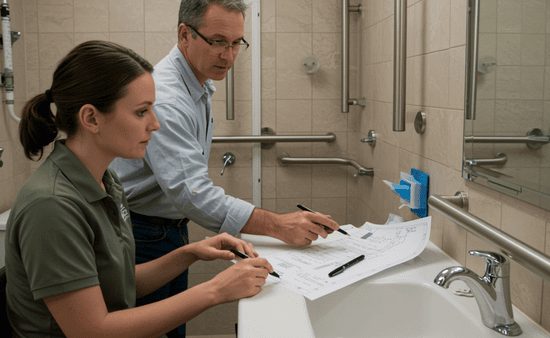
Guessing what modifications a home needs can lead to wasted money and overlooked hazards.
Occupational Therapists
An occupational therapist (OT) can evaluate a senior’s physical abilities and observe how they navigate their current home. The OT will then recommend specific tools and modifications tailored to the individual’s exact needs.
Home Modification Specialists
Certified Aging-in-Place Specialists (CAPS) are contractors trained to build and remodel homes safely for seniors. They know building codes and the best construction methods for installing ramps, widening doors, and reinforcing bathroom walls for grab bars.
Maintaining Physical Activity and Well-being
Modifying the home is only half the equation. Maintaining physical health keeps seniors mobile for longer.
Gentle Exercises and Stretching
Daily movement helps maintain muscle mass and joint flexibility. Activities like chair yoga, tai chi, and light resistance band training can drastically improve balance and reduce the likelihood of falls.
Community Programs
Many local senior centers offer group exercise classes designed specifically for older adults. These programs improve physical health while providing important social interaction.
Financial Considerations and Resources
Updating a home and purchasing mobility equipment can be expensive. Fortunately, various resources can help ease the financial burden.
Insurance Coverage
Medicare Part B sometimes covers a portion of durable medical equipment, such as walkers or wheelchairs, if prescribed by a doctor. Some Medicare Advantage plans also offer allowances for minor home safety modifications.
Government Programs and Grants
The Department of Veterans Affairs (VA) provides grants for veterans to modify their homes. Additionally, many state and local governments offer assistance programs for low-income seniors who need home modifications.
Reverse Mortgages and Home Equity
For homeowners with significant equity, a reverse mortgage or a Home Equity Line of Credit (HELOC) can free up cash to pay for extensive remodeling projects, like adding a first-floor bathroom or installing a stairlift.
Conclusion
Now that you have a better understanding of the different options available for financing home modifications, it’s important to carefully consider which option is best for your specific needs and financial situation.