
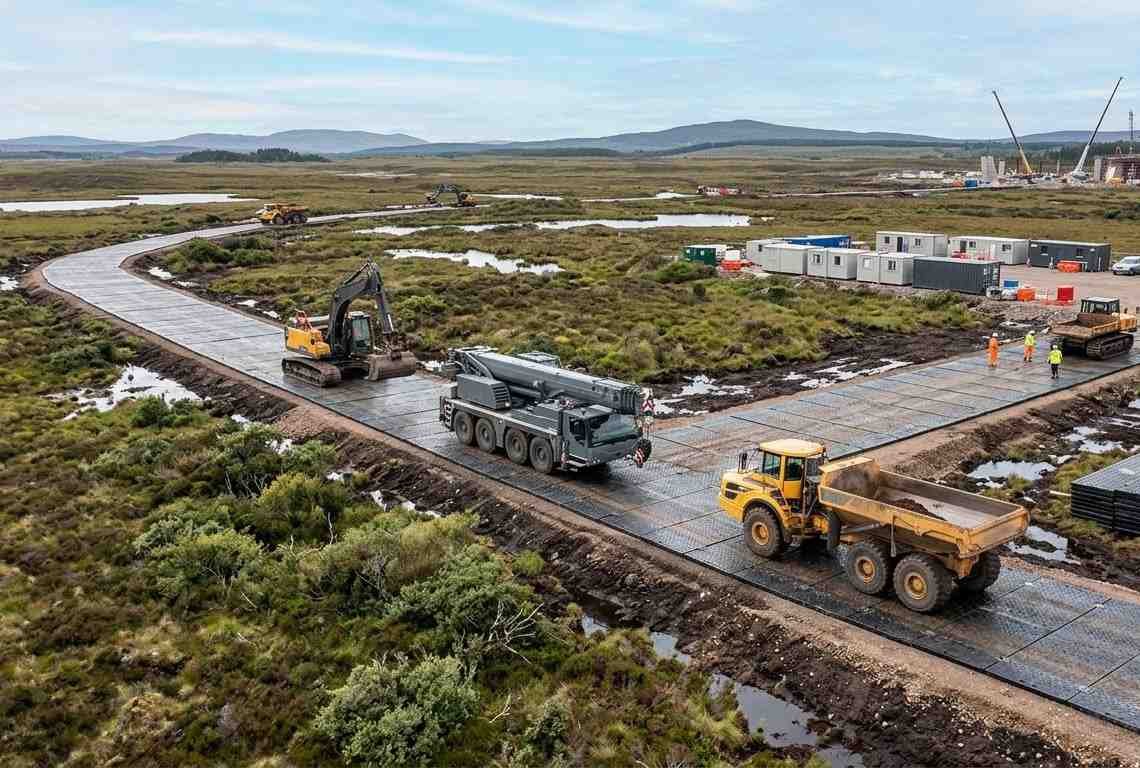
Ground protection is a critical consideration in construction, landscaping, and environmental management projects. Heavy machinery and frequent foot traffic can damage the soil, vegetation, and underlying ecosystems, leading to erosion and costly site restoration. To mitigate these issues, bog mats offer a practical and efficient solution.
What Are Bog Mats?
Bog mats are temporary ground protection surfaces typically made from timber or recycled plastic materials. They distribute the load of heavy vehicles and equipment over a larger area, preventing the machinery from sinking into soft or unstable ground conditions such as bogs, wetlands, or muddy terrain. Their use is instrumental in preserving ground integrity during various types of site operations.
Materials and Construction
The primary materials utilised for bog mats are hardwood timber and high-density polyethylene (HDPE) plastics. Wooden bog mats are traditionally crafted from durable hardwoods like oak or Douglas fir, which provide strength and resilience. Plastic bog mats, on the other hand, are lightweight, weather-resistant, and recyclable, making them increasingly popular for environmentally sensitive projects.
Both types of mats are designed to interlock or be laid side-by-side to create a stable, non-slip surface that can support heavy loads without displacement. Their modular design ensures easy transportation, installation, and removal.
Applications of Bog Mats
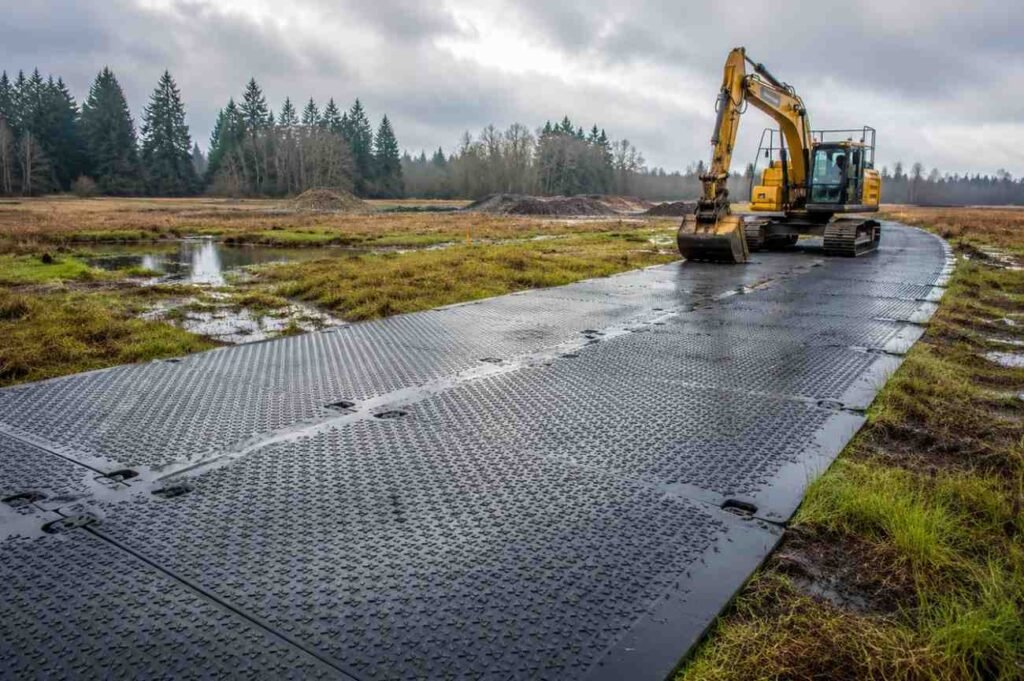
Bog mats are employed in various sectors, including construction, forestry, oil and gas, and event management. They are crucial in areas where the soil is particularly vulnerable to damage or where access is limited by waterlogged conditions.
In construction, bog mats facilitate the movement of cranes, bulldozers, and earth movers over soft ground without causing excessive rutting or compaction. They prevent delays caused by weather conditions by maintaining a stable pathway for logistical operations.
Forestry operations benefit from bog mats by protecting the forest floor from machines and reducing environmental disturbances. Similarly, during oil and gas exploration in remote wetlands, bog mats provide critical access routes, minimising the ecological footprint.
Environmental Benefits
Using bog mats substantially reduces soil disturbance and vegetation damage. By preventing heavy machinery from penetrating the ground, they help maintain natural drainage patterns and soil structure. This is essential for preserving the health of wetlands and other sensitive habitats.
Moreover, bog mats enable compliance with environmental regulations and promote sustainable site management practices. Their reusability also contributes to resource efficiency.
Choosing the Right Bog Mats
Selecting appropriate bog mats depends on factors such as soil type, load requirements, project duration, and environmental sensitivity. For instance, wooden bog mats might be preferred for short-term projects where immediate load distribution is needed, while plastic mats are optimal for longer-duration use due to their durability and lower maintenance.
Project managers should assess ground conditions carefully, considering soil bearing capacity and saturation levels to determine the size and thickness of the mats required. Consulting suppliers and specialists can help in making an informed decision to ensure site protection goals are met effectively.
Installation and Maintenance
Installing bog mats requires planning to maximise their effectiveness. Mats should be laid on level ground where possible and arranged in a pattern that provides continuous coverage. Overlaps or interlocking connections are recommended to avoid gaps that may cause instability.
Maintenance is minimal but important. Wooden mats should be inspected regularly for signs of wear, rot, or damage, especially when reused over multiple projects. Plastic mats are easier to clean and generally require less upkeep.
Cost Considerations
Costs for bog mats vary depending on material, size, and quantity. Wooden mats are often less expensive initially but may incur higher maintenance or replacement expenses over time. Plastic mats generally have a higher purchase price but longer service life and lower maintenance costs.
When budgeting, it is essential to factor in transportation, installation, and removal expenses. In many cases, the savings from reduced site restoration and avoiding delays justify the investment in quality bog mats.
Complying with Regulations
In many regions, permits and environmental impact assessments require site operators to implement ground protection measures like bog mats. Project managers should familiarise themselves with local regulations and ensure that the selected mats meet any stipulated environmental and safety standards.
Advantages Over Alternative Solutions
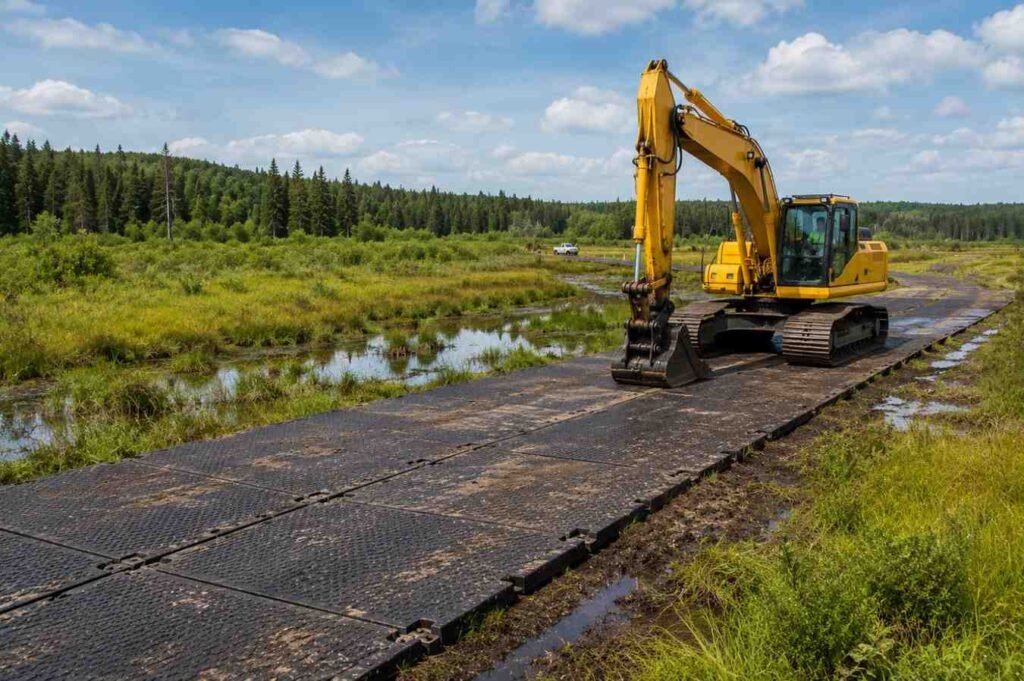
Bog mats offer several advantages compared to other ground protection methods, such as gravel or soil stabilisation. They provide immediate load-bearing capacity without the need for extensive ground preparation. Additionally, bog mats are reusable and cause less disruption to the site post-project.
While gravel can alter drainage and may require removal after use, bog mats preserve the soil surface integrity and can be quickly deployed and collected as needed.
Limitations to Consider
Despite their benefits, bog mats have some limitations. They are less effective on extremely uneven terrain or where there are large obstructions. In some cases, additional ground preparation or complementary stabilisation techniques may be required.
Furthermore, timber mats can be heavy and bulky, posing logistical challenges during transport. Plastic mats alleviate weight issues but may have limited load capacities depending on design.
Procurement and Suppliers
Reliable suppliers provide detailed information about product specifications, load ratings, and installation guidelines. As with choosing best home builders, it is advisable to select suppliers who offer customised solutions tailored to specific project needs. The bog mats range available through dedicated suppliers can accommodate diverse ground protection demands across industries.
Ordering early ensures availability and allows sufficient time to plan installation logistics effectively.
Conclusion
Bog mats play a vital role in ground protection across various sectors, enabling safe and environmentally responsible access to difficult terrains. By distributing loads and preventing soil damage, they reduce project downtime and environmental impact. Selecting appropriate bog mats based on site conditions and operational requirements optimises their effectiveness.
Incorporating bog mats into site management plans supports sustainable practices and compliance with regulatory obligations. As such, they represent a sound investment for any project involving ground disturbance in sensitive or unstable environments.