
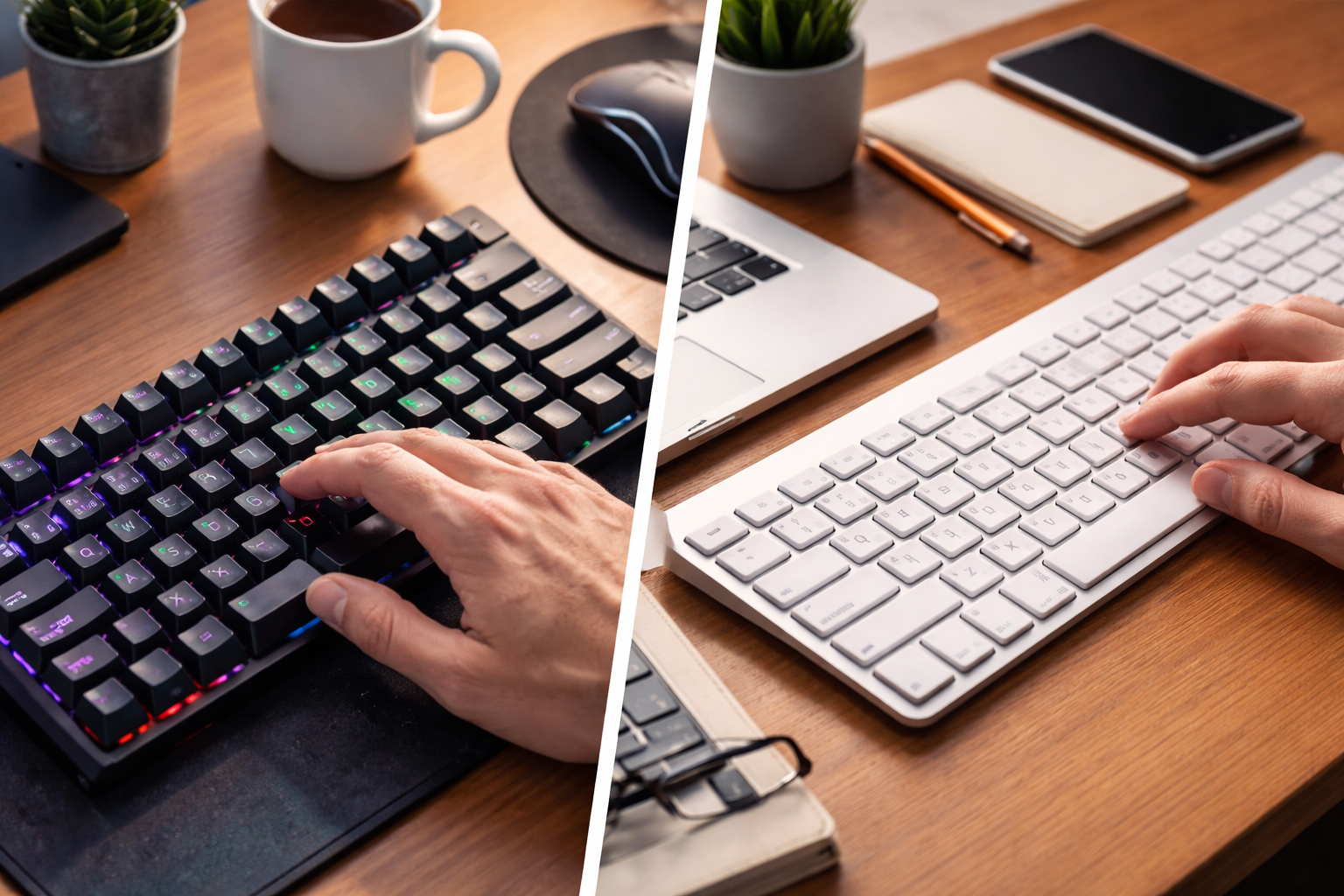
The first time I paid attention to how a keyboard felt, it wasn’t because of specs or brand names. It was because my fingers felt tired halfway through the day. I was typing more than ever, work notes, long emails, late-night ideas, and suddenly the keyboard under my hands mattered more than I expected. That’s when the question surfaced naturally: mechanical vs membrane keyboard, what actually fits the way I type?
On paper, the difference sounds technical. In real life, it’s personal. Some people love the crisp feedback of every keystroke. Others want something quiet and forgiving that disappears into the background. The right choice isn’t about hype or price tags, it’s about how your hands move, how long you type, and what you expect from a keyboard once the novelty wears off.
Understanding the Real Difference Between Mechanical and Membrane Keyboards

At the core, this comparison comes down to how keystrokes are registered and how that feels over time.
Mechanical keyboards use individual, spring-loaded switches under every key. Each press is intentional, consistent, and designed to reset quickly. Membrane keyboards rely on a rubber or silicone layer that compresses to complete a circuit, creating a softer and quieter typing experience.
Neither approach is universally better. The difference shows up most clearly after hours of use, not minutes.
Mechanical Keyboards: Built for Feedback and Longevity
Mechanical keyboards tend to attract people who type a lot and care deeply about how each keystroke feels. The defining trait is tactile feedback, sometimes a noticeable bump, sometimes an audible click that confirms exactly when a keypress is registered.
That feedback can subtly change how you type. Many users find they bottom out keys less aggressively, which can reduce finger fatigue during long sessions. Over time, that precision becomes second nature.
Mechanical keyboards are especially well-suited for:
- Heavy typists, writers, and programmers who spend hours at the keyboard
- Gamers who benefit from faster actuation and multi-key input support
- Users who enjoy customization, from switch types to keycaps and lighting
Durability is another major factor. Mechanical switches are often rated for tens of millions of keystrokes, making them a long-term investment rather than a disposable accessory.
The trade-off is clear, though. Mechanical keyboards usually cost more, and depending on the switch type, they can be loud. In shared or quiet environments, that sound can become a dealbreaker rather than a feature.
Membrane Keyboards: Quiet, Lightweight, and Practical

Membrane keyboards are everywhere in offices, laptops, shared desks, and for good reason. They prioritize quiet operation and affordability, making them easy to live with in almost any environment.
Typing on a membrane keyboard feels softer and more cushioned. Some describe it as “mushy,” while others appreciate the reduced resistance and lower noise. For users who type intermittently rather than continuously, that softer feel can actually be more comfortable.
Membrane keyboards tend to work best for:
- Quiet spaces where noise matters
- Budget-conscious users who want reliable basics
- Casual typing, emails, and everyday tasks
- Travel or portable setups due to slim, lightweight designs
The downside shows up over time. Membrane keyboards generally wear out faster, and the typing feel can become inconsistent as the rubber layer degrades. Rapid or highly precise input can also feel less responsive compared to mechanical options.
How Typing Style Should Guide Your Choice
The mechanical vs membrane keyboard debate often misses the most important factor: how you actually type.
If your day involves long stretches of focused typing, writing, coding, or documentation, the consistency and feedback of a mechanical keyboard can make typing feel more controlled and less tiring. The keyboard becomes a tool rather than a surface you fight against.
If your usage is lighter or more varied, a membrane keyboard might fade into the background exactly the way you want it to. Quiet keystrokes, minimal desk presence, and lower cost all add up to a stress-free experience.
Gaming sits somewhere in the middle. Competitive players often lean towards mechanical for responsiveness and rollover support, while casual players may never notice the difference.
Durability, Cost, and Long-Term Value

One reason people hesitate before switching to mechanical keyboards is price. Upfront, they are undeniably more expensive. But longevity shifts the equation. A well-built mechanical keyboard can last years longer than most membrane alternatives.
Membrane keyboards win on immediate affordability and accessibility. If something spills, breaks, or gets replaced frequently, the lower replacement cost matters.
Thinking long-term helps clarify the decision. Are you buying something disposable, or something meant to become part of your daily routine for years?
Frequently Asked Questions (FAQs)
1. Is a mechanical keyboard always better than a membrane keyboard?
No. A mechanical keyboard excels in durability, feedback, and customization, but membrane keyboards can be more practical for quiet environments, lighter use, and tighter budgets.
2. Which keyboard type is better for long typing sessions?
Mechanical keyboards are often preferred for extended typing because their consistent feedback can reduce finger fatigue and improve accuracy over time.
3. Are membrane keyboards bad for typing speed?
Not necessarily. Many people type quickly on membrane keyboards. The difference is more about feel and consistency than raw speed.
4. Do mechanical keyboards require maintenance?
They can benefit from occasional cleaning, especially since they last longer. However, they don’t require special maintenance beyond normal care.
Final Thoughts
The real answer to the mechanical vs membrane keyboard question isn’t hidden in specs or switch charts; it’s in your habits. How long you type, how sensitive you are to sound, and whether you value feedback or silence all matter more than marketing claims. A keyboard should support your workflow, not distract from it.
Once you stop chasing “the best” and start choosing what fits your hands and routines, the decision becomes surprisingly clear.