
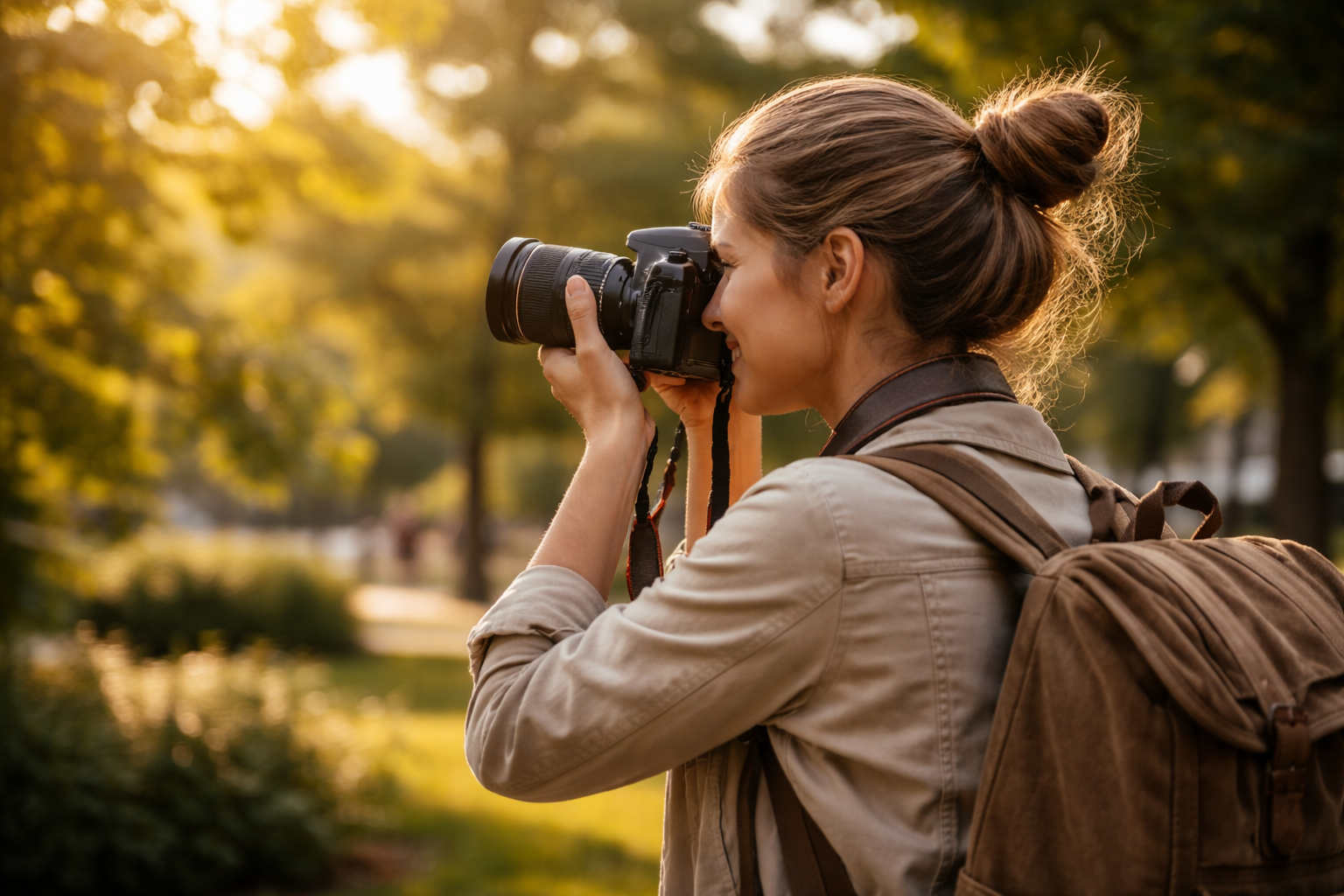
I remember when I first started taking photos, I was convinced my camera was holding me back. Every blurry frame or flat-looking image felt like proof that I needed better gear. It took time and a lot of missed shots to realize that improvement doesn’t start with spending money. It starts with slowing down and paying attention.
If you’re a beginner, this is good news. You don’t need a new camera or lens to move forward. You need to understand what you already have, learn to see differently, and work with light instead of fighting it.
Start By Knowing Your Camera Properly
Most beginners only use a small portion of what their camera can actually do. Even entry-level cameras and smartphones offer more control than people realize. Learning how to improve photography begins with getting comfortable with your current device.
Spend time exploring your settings without pressure. Learn where ISO, shutter speed, and aperture live. Customize buttons, so you’re not digging through menus while shooting. This familiarity alone makes your photography feel calmer and more intentional.
Move Away From Auto Mode Slowly

Auto mode is helpful at first, but staying there too long limits growth. Try Aperture Priority or Manual mode in low-stakes situations, like photographing your backyard, a park, or a quiet street.
As you experiment, you’ll start noticing how depth of field changes the mood of an image, or how shutter speed affects motion. Shooting in RAW, if available, also gives you more flexibility when a photo comes out too dark or too bright.
Learn Your Camera’s Limits
Every camera has boundaries. Maybe it struggles in low light or takes time to concentrate. That doesn’t mean it’s bad. It means you need to work within its strengths.
Once you understand what your gear can and cannot do, frustration drops. You stop fighting the camera and start making better choices with framing, timing, and light.
Train Your Eye Before You Chase Results

Photography improves the moment you start noticing more than just your subject. Beginners often shoot everything at eye level because it feels natural. Changing that habit instantly adds interest.
Lower your angle. Step back. Move closer. A simple shift in position can completely change how a photo feels. When walking through a U.S. neighborhood or city street, notice how sidewalks, fences, and shadows naturally guide the viewer’s eye.
Simplify Your Composition
Busy photos are usually the result of too much information in the frame. Simplifying helps your subject stand out and makes images feel intentional.
Using your camera’s grid can help you place subjects thoughtfully. Walking closer instead of zooming removes distractions. Over time, composition becomes instinctive instead of forced.
- Use the grid to place subjects slightly off-center
- Move closer to remove background clutter
- Look for lines that guide the eye naturally
Study Strong Photography Regularly

Improving photography also means feeding your visual memory. Visit a local library and spend time with photo books. Look slowly. Notice how light falls and how frames are balanced.
You don’t need to copy styles. You’re building awareness. Over time, this influences how you frame scenes without conscious effort.
Use Light As Your Main Tool
Light is the biggest difference-maker in photography, and it costs nothing. Learning to work with light is one of the fastest ways for beginners see improvement.
Early mornings and evenings offer soft, forgiving light. Try photographing the same place at noon and again near sunset. The difference will feel dramatic.
Make The Most Of Natural Light Indoors

Indoors, windows are powerful tools. Place your subject near natural light and observe how shadows add depth. Even simple setups can look polished with thoughtful positioning.
You don’t need professional equipment to shape light.
- A white bedsheet can soften harsh sunlight
- Foil on cardboard can reflect light into shadows
Practice With Intention, Not Pressure
Taking more photos helps only when you’re paying attention. Mindless shooting leads to burnout. Purposeful practice builds skill.
Try limiting yourself. Use one focal length for a day. Avoid zooming. These constraints force you to think before pressing the shutter and strengthen decision-making.
Expect Bad Photos and Learn From Them

Every photographer has thousands of failed images behind their best work. That volume isn’t a weakness. It’s how skills develop.
Review your photos regularly. Ask what worked and what didn’t. Small insights compound faster than chasing perfection.
Build Simple Habits That Stick
Improvement comes from consistency, not motivation. Carry your camera more often. Take short photo walks. Photograph ordinary things.
Set small goals. One strong image a week is progress. Over time, these habits create confidence and clarity.
Common Beginner Mistakes That Slow Growth
Many beginners stall because they focus on the wrong things.
- Comparing work to professionals
- Believing better gear equals better photos
- Avoiding learning basic camera settings
Let curiosity replace comparison. That shift changes everything.
Frequently Asked Questions (FAQs)
1. How long does it take to improve photography?
Most beginners notice progress within a few weeks of focused practice. Confidence builds steadily over months.
2. Is manual mode necessary for beginners?
Not immediately, but learning it helps you understand how your camera responds to light and motion.
3. Can smartphone photographers improve in the same way?
Yes. Light, composition, and perspective matter more than camera type.
4. Do I need editing skills to get better?
Basic editing helps, but strong photos start with good light and framing.
Final Thoughts
Learning how to improve photography without buying expensive gear is really about attention. When you stop blaming equipment and start observing light, angles, and habits, improvement feels natural and steady. Photography becomes less stressful and more rewarding.
Progress shows up quietly, then all at once.