

Walk into two different classrooms, and you can feel the difference instantly. One room feels heavy and distracting. The other feels calm, alert, and easy to think in. That reaction is not accidental. In modern education, the environment is not just a backdrop. It actively shapes how students focus, process information, and stay mentally engaged.
Across American K–12 schools and college campuses, educators are realizing that academic focus is deeply tied to physical comfort, emotional safety, and intentional design. The environment either supports learning quietly in the background or constantly competes for a student’s attention. There is rarely a middle ground.
The Environment As An Active Participant In Learning
In modern education settings, learning does not happen in isolation. A student’s brain is continuously reacting to temperature, noise, lighting, and even how welcoming a space feels. When these elements are misaligned, students spend mental energy coping instead of learning.
This is why schools investing in modern learning environments often see improvements not just in test scores, but in sustained attention, classroom behavior, and overall academic confidence. Focus improves when the environment stops fighting the learner.
Physical Factors That Directly Influence Academic Focus

Physical conditions are often the most immediate disruptors of attention. Students cannot “power through” an uncomfortable environment for long without consequences.
Temperature and air quality matter more than most people realize. In classrooms and lecture halls, focus peaks when temperatures stay within a comfortable range. As rooms get warmer and ventilation drops, concentration falls. Poor airflow increases carbon dioxide levels, which can trigger drowsiness, headaches, and slower information processing. This is especially noticeable in crowded classrooms and older campus buildings.
Noise is another silent drain on focus. In schools near busy roads or in buildings with thin walls, students are forced to filter out constant background sound. That filtering takes effort. Over time, it leads to mental fatigue and reduced comprehension, particularly during reading, testing, or lectures that rely on listening.
Furniture design also influences attention. Rigid seating limits movement and increases restlessness, especially for younger students. Modern classrooms increasingly use flexible furniture that allows subtle movement and quick shifts between independent work and collaboration. These small physical adjustments can significantly improve sustained focus.
How Psychological Environment Shapes Concentration

Beyond physical comfort, the psychological environment determines whether students feel mentally safe enough to focus. A space can be physically perfect and still fail if it overwhelms or alienates learners.
Visual design is a key factor. Completely blank walls feel sterile and uninspiring, but overly decorated classrooms create visual noise. When students are surrounded by excessive posters, colors, and stimuli, their brains struggle to filter what matters. Balanced, purposeful visuals support attention rather than scatter it.
Connection to nature, even in small ways, improves focus. Views of greenery, access to natural materials, or indoor plants help reduce stress and support sustained attention. In urban schools, especially, biophilic design elements act as a mental reset during long academic days.
Modern Classroom Design Trends
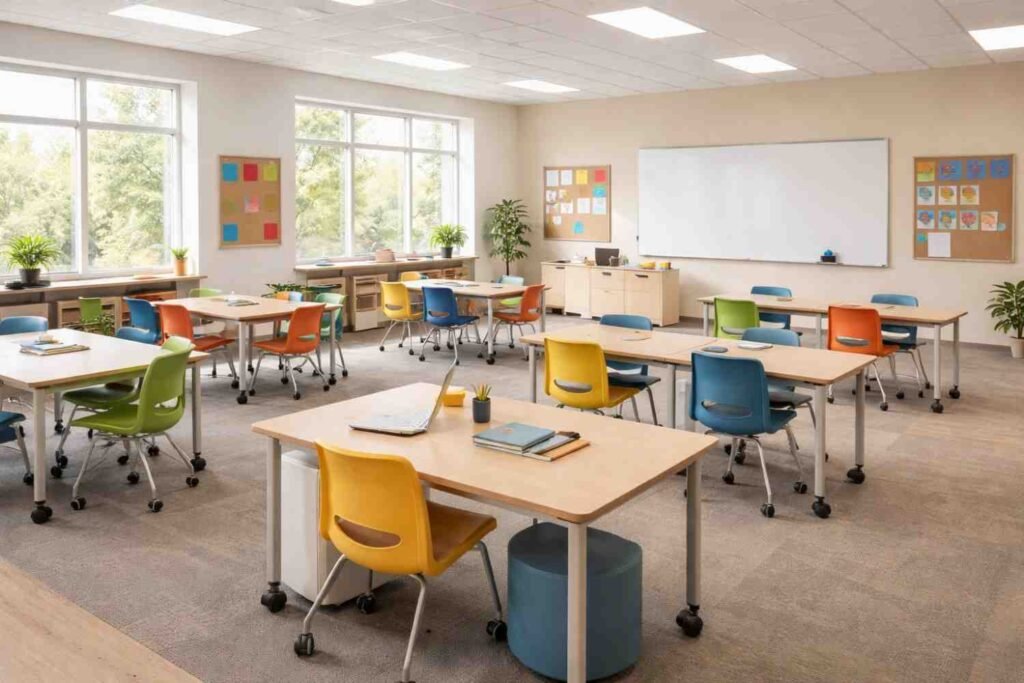
Educational design in the U.S. is shifting toward flexibility and intentional zoning. Instead of one-size-fits-all classrooms, schools are creating environments that match different cognitive demands.
Traditional row seating still works well for lectures and independent focus-heavy tasks. Meanwhile, grouped tables support collaboration and discussion-based learning. Many modern classrooms now blend both approaches depending on the subject and activity.
These design choices recognize that focus is dynamic. Students concentrate best when their environment adapts to how they are learning, not the other way around.
The Home Environment And Academic Focus

For many students, especially since the rise of remote and hybrid learning, the home environment has become an extension of the classroom. Focus at home depends on structure, boundaries, and sensory control.
Students benefit from consistent study spaces with minimal noise and visual distractions. Even small adjustments, such as designated desks or improved lighting, can improve concentration. Emotional support matters just as much. When students feel supported rather than monitored, their ability to focus improves.
College students face similar challenges in dorms and shared housing. Those who intentionally design their study spaces tend to maintain better focus and academic momentum over time.
Why Environment Matters More Than Motivation Alone
Motivation is important, but it cannot compensate for a poorly designed environment. When students are uncomfortable, overstimulated, or emotionally disengaged, focus becomes a constant struggle.
Modern education settings in the U.S. are increasingly recognizing that academic success depends on aligning physical design with psychological needs. When the environment supports the learner, focus becomes sustainable instead of exhausting.
Key Environmental Elements That Shape Academic Focus

- Thermal Comfort And Air Quality: Stable temperatures and proper ventilation reduce fatigue and support sustained attention in classrooms and lecture halls.
- Noise Control: Managed acoustics lower cognitive load, allowing students to focus on comprehension rather than filtering distractions.
- Lighting Balance: Access to natural light, without glare or flicker, improves alertness and visual comfort.
- Flexible Layouts: Ergonomic, movable furniture supports both independent focus and collaborative learning without mental strain.
Frequently Asked Questions (FAQs)
1. How Does Classroom Environment Affect Academic Focus?
Classroom environment affects focus by influencing comfort, sensory load, and emotional safety. Temperature, noise, lighting, and layout all determine how easily students can sustain attention.
2. Does Natural Light Really Improve Student Focus?
Yes. Natural light supports alertness, reduces eye strain, and improves mood, all of which contribute to stronger academic focus in both K–12 and college settings.
3. Why Does Noise Impact Learning So Much?
Noise forces the brain to work harder to filter distractions. This extra cognitive effort reduces mental energy available for comprehension and memory.
4. Can Classroom Design Improve Academic Performance?
Thoughtful design can improve focus, engagement, and information retention by reducing distractions and supporting different learning modes.
Final Thoughts
Academic focus is not just a personal skill students need to develop. It is a shared responsibility shaped by the environments schools and colleges create. In modern U.S. education settings, the physical and psychological environment acts as a silent partner in learning, either strengthening attention or steadily eroding it. When classrooms, campuses, and homes are designed with focus in mind, students gain the mental space they need to think clearly and learn deeply.
Small changes in the environment often lead to lasting improvements in academic engagement and confidence.