
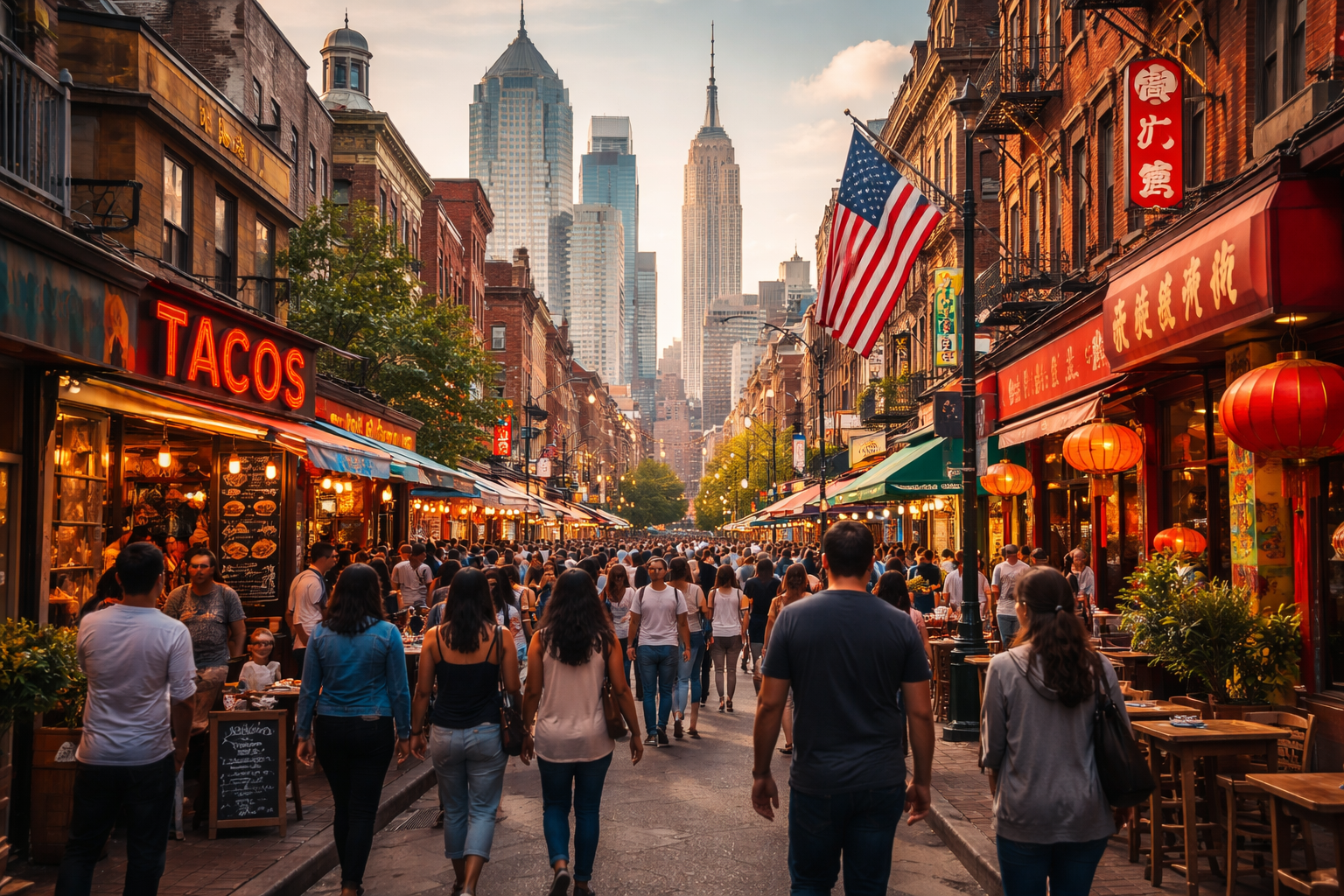
Globalization stopped being an abstract idea a long time ago. In the United States, you feel it when a small-town diner adds tacos to the menu or when a downtown neighborhood starts to look like every other global city skyline. Culture here isn’t disappearing overnight, but it is shifting in ways that are easy to miss unless you slow down and pay attention.
I have seen this play out differently depending on where you stand. In major cities, globalization feels loud and fast. In smaller towns, it feels quieter but no less powerful. The impact of globalization on local culture today is less about replacement and more about tension between what is gained, what is lost, and what quietly adapts.
How Globalization Reshaped Big Cities
Large American cities have become global hubs almost by default. New York, Los Angeles, Chicago, Houston, and San Francisco now function as cultural crossroads where global flows of people, money, media, and ideas meet daily life.
One of the most visible changes is cultural fusion. Neighborhoods no longer fit into neat cultural categories. Food is the easiest example to spot. Korean tacos, sushi burritos, and halal smash burgers are not trends anymore; they are normal. Music, fashion, and street art show the same blending. This kind of hybrid culture is one of the most creative outcomes of globalization.
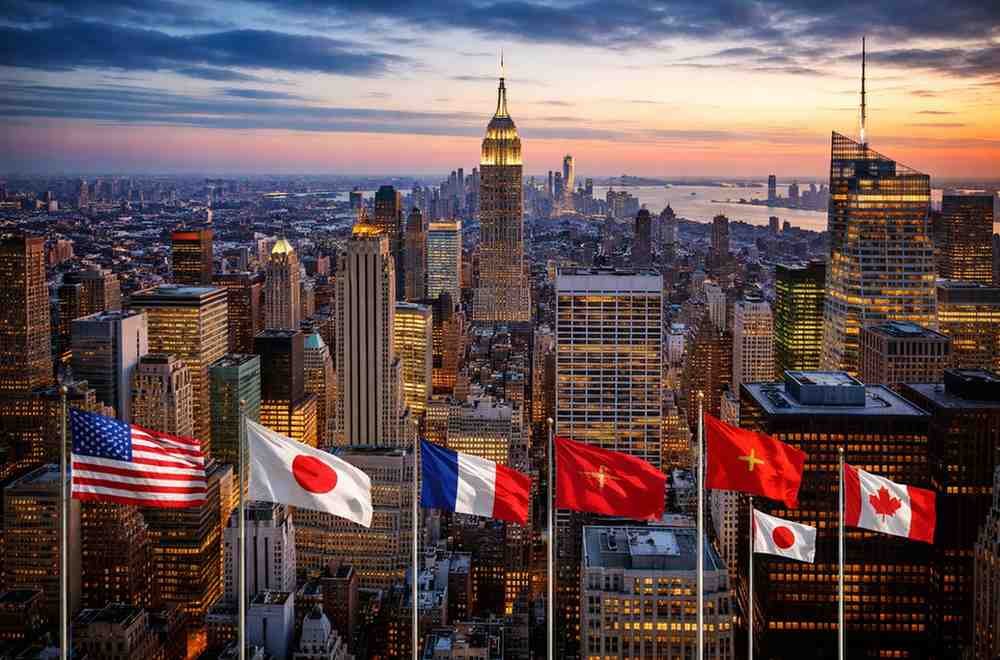
At the same time, globalization has deepened economic contrasts. Global industries bring high-paying jobs in technology, finance, and entertainment, but they also push housing prices up and displace long-standing communities. Cultural diversity grows, but so does separation between those who benefit and those who struggle to stay.
Another subtle shift is architectural sameness. Walk through newer parts of different U.S. cities, and you start noticing the same glass towers, the same mixed-use developments, the same retail chains on the ground floor. Local character often survives only in older neighborhoods, fighting redevelopment pressure.
The Impact Of Globalization On Local Culture In Small Towns
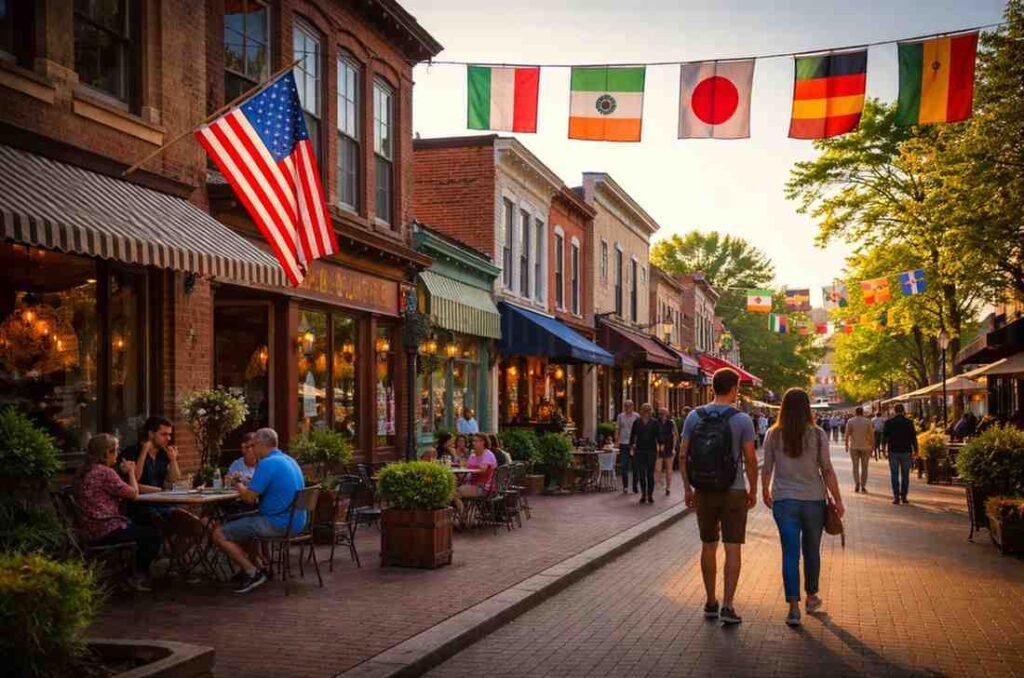
In smaller towns, the effects of globalization are less visible but often more personal. These communities usually receive fewer economic benefits, yet they still feel the cultural and commercial pressure.
Local identity has taken some hard hits. Family-owned stores close when national chains arrive. Traditional crafts fade when mass-produced goods become cheaper and more accessible. This process is often described as “Walmartization,” but it goes deeper than shopping habits. It changes how people relate to their town and to each other.
At the same time, globalization has opened unexpected doors. American farmers sell products to overseas markets. Remote work has allowed professionals to live in rural areas while staying connected to global industries. Cultural influence now flows both ways, even if unevenly.
The real challenge for small towns is maintaining a sense of place while staying economically relevant. When everything starts to look and feel the same, local culture becomes something people talk about rather than live.
Shared Cultural Shifts Across Cities And Towns
Despite their differences, big cities and small towns in the U.S. now share several cultural shifts driven by globalization.
One is the rise of consumer culture. Global brands shape tastes, routines, and even social habits. Coffee chains and fast-food restaurants create familiarity, but they also flatten regional distinctions that once defined American communities.
Another shift is linguistic dominance. English continues to spread as the default language of business and digital communication. While this helps global interaction, it raises concerns about the survival of indigenous languages and regional dialects that carry history and identity.
There is also a quiet counter-movement happening. Communities are using technology to preserve what globalization threatens to erase. Local museums digitize archives. Cultural groups share traditions through social media. Town festivals attract global attention without losing their roots.
Where Cultural Loss And Cultural Growth Overlap

The impact of globalization on local culture is not a clean story of loss versus gain. It is often both at once. A local tradition might fade in everyday practice but gain new life online. A neighborhood may lose long-time residents while attracting new cultural expressions that reshape its identity.
What matters is who controls that change. When communities actively choose how they adapt, globalization becomes a tool. When change is imposed through economic pressure alone, culture weakens.
What Local Communities Are Doing To Stay Grounded
Across the United States, communities are responding in practical ways:
- Supporting local businesses through cooperative models
- Protecting historic districts and cultural landmarks
- Using digital platforms to document and teach local traditions
These efforts do not reject globalization. They push back against cultural erasure while accepting connection.
Frequently Asked Questions (FAQs)
1. How Does Globalization Affect Cultural Identity?
Globalization reshapes cultural identity by blending global influences with local traditions. In the U.S., this often leads to hybrid cultural expressions rather than complete cultural loss.
2. Why Do Big Cities Experience Globalization Differently Than Small Towns?
Big cities attract global industries, migrants, and media faster, creating intense cultural exchange. Small towns experience slower economic benefits but still feel cultural pressure through global brands and digital media.
3. Does Globalization Always Lead To Cultural Homogenization?
Not always. While some sameness occurs, many communities adapt by blending global elements into existing traditions, creating new cultural forms.
4. Can Technology Help Preserve Local Culture?
Yes. Digital archives, social media, and online communities allow local cultures to be shared, documented, and sustained beyond geographic limits.
Final Thoughts
The impact of globalization on local culture in the United States is not a straight line. It moves in layers, shaped by geography, economics, and community choice. Big cities often absorb global influence quickly, sometimes at the cost of local character. Small towns feel the pressure more quietly but struggle harder to protect what makes them distinct. Neither experience is better or worse, just different.
What becomes clear is that culture survives when people participate in it, not when it is treated as a souvenir. Globalization will keep moving forward. The question is whether local culture is carried along consciously or left behind unintentionally.