
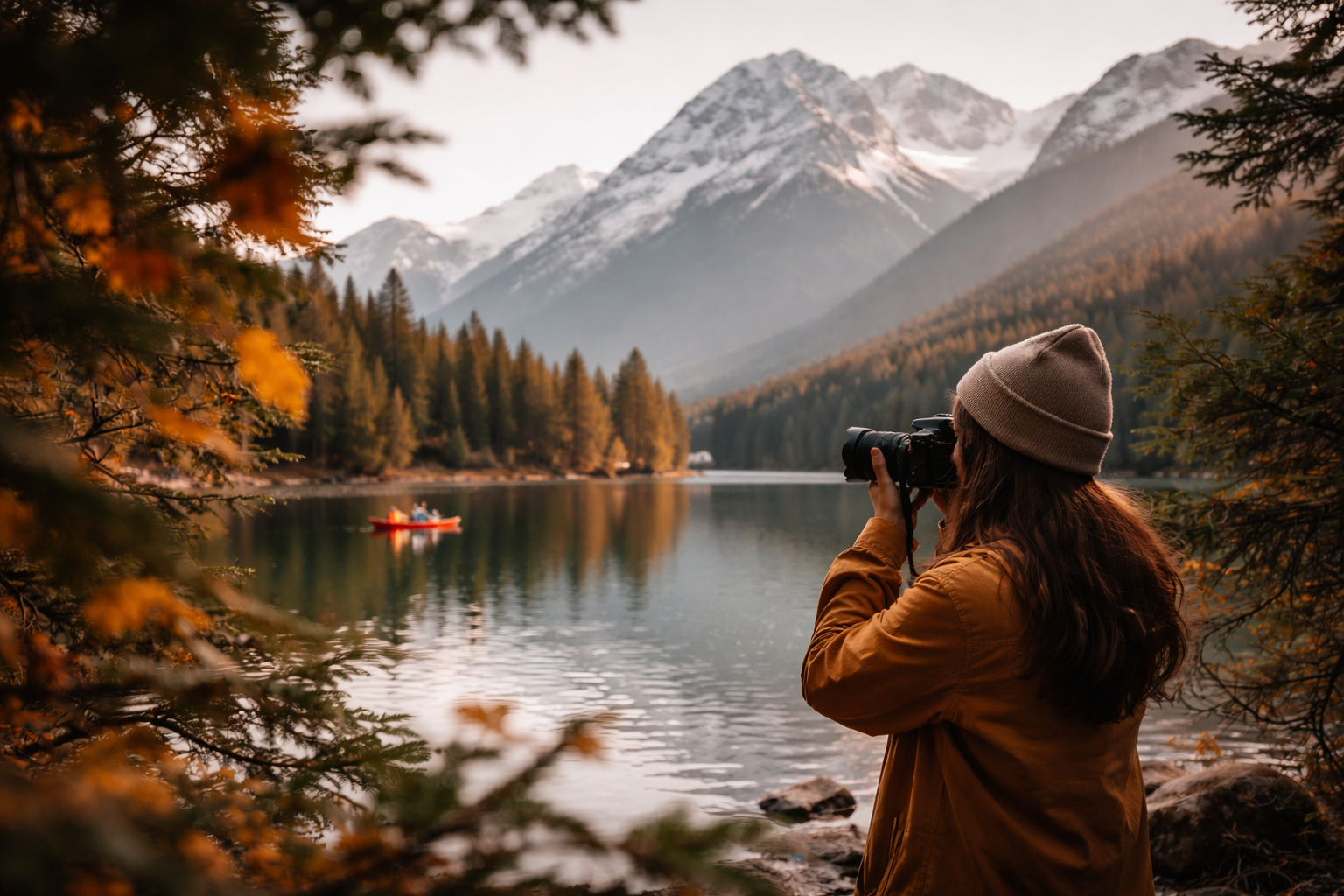
Photography felt flat to me for a long time. The scenes were interesting. The light was good. But the images still looked like what they were: two-dimensional records of a moment. That changed the first time I consciously started using layering techniques in photography while shooting on a quiet street in New York. Suddenly, the images had depth. They felt lived-in, not observed.
Layering techniques in photography are not about adding complexity for the sake of it. They are about seeing space differently. Once you start noticing how elements sit in front of, beside, and behind each other, your photos begin to feel more immersive. The viewer no longer looks at the image. They step into it.
What Layering Techniques In Photography Actually Mean
At its core, layering techniques in photography are about using physical distance inside the frame. You are intentionally placing visual elements at different depths so the image feels three-dimensional instead of flat.
Most strong layered compositions rely on three distinct planes:
- Foreground: Closest to the camera, often subtle but critical
- Middle Ground: Where the main subject usually lives
- Background: The environment that gives context and atmosphere
This structure works because it mirrors how we experience the real world. Our eyes naturally move from near to far. When your photograph respects that movement, it feels intuitive and emotionally grounded.
Using Foreground Elements To Pull The Viewer In

Foreground elements act like an invitation. They give the viewer a starting point and a sense of scale.
In US street photography, this might be something as simple as shooting past a parked bicycle in Chicago or framing a subject through a café window in San Francisco. The foreground does not need to be sharp or dominant. Its job is to create presence.
Foreground layering works best when it feels accidental rather than staged. Branches, door frames, railings, reflections, or even shadows can quietly do the work without announcing themselves.
Why The Middle Ground Carries Emotional Weight

The middle ground is where meaning usually sits. This is where the viewer’s eye settles, and where emotion is most clearly communicated.
In portraits, the middle ground often holds the face or gesture. Then, in documentary work, it might be a person interacting with their environment. In landscape photography, it could be a road, a cabin, or a river cutting through the frame.
Layering techniques in photography become powerful when the middle ground is clearly separated from what sits in front of it and behind it. This separation creates focus without isolating the subject from its story.
Letting The Background Provide Context, Not Noise
Backgrounds are often treated as an afterthought, but they carry narrative weight. A subject standing alone means one thing. That same subject with a courthouse, subway entrance, or fading billboard behind them means something else entirely.
In US-based documentary photography, backgrounds help anchor time and place. A recognizable landmark, signage, or even architectural style gives viewers unspoken information. The key is restraint. A good background supports the story without competing for attention.
Techniques That Add Depth And Emotional Tone

Some layering techniques in photography show up again and again in strong images because they work on both a visual and emotional level.
Shoot Through Objects
Positioning yourself behind elements like branches, glass, or doorways adds intimacy. It feels observational, as if the viewer is sharing your physical position.
Selective Focus
Using a wide aperture allows you to keep the middle ground sharp while the foreground and background soften. This creates separation and often adds a quiet, reflective mood.
Leading Lines Across Layers
Roads, fences, railings, or shadows that begin in the foreground and lead into the distance guide the viewer naturally through the frame.
Layering With Light And Color
Warm tones tend to feel closer, while cooler tones recede. Backlighting or contrast can separate layers without needing physical distance.
Obstructive Layering
Partially hiding a subject behind a foreground element introduces tension or mystery. It suggests there is more happening beyond what is immediately visible.
Why Layering Techniques In Photography Matter For Storytelling

Layering techniques in photography are especially important in street and documentary work because they allow multiple stories to exist in a single frame.
Imagine a person waiting at a crosswalk in the foreground, another subject walking mid-frame, and a digital billboard in the background showing the time or a headline. In one image, you communicate emotion, movement, and context. The viewer decides how long to linger on each layer.
This is where photography moves beyond aesthetics. Layering lets images speak in sentences instead of words.
Common Mistakes That Flatten Layered Images
Layering does not mean clutter. One of the most common mistakes is adding elements without intention.
If layers overlap without purpose, the image feels busy rather than dimensional. Another mistake is ignoring the edges of the frame. Foreground elements cut off awkwardly can pull attention away from the subject instead of guiding it.
Good layering feels calm. Even when the scene itself is chaotic, the structure should feel deliberate.
How To Practice Layering Techniques In Photography

The best way to learn layering techniques in photography is to slow down. Instead of lifting the camera immediately, take a moment to scan near, far, and in between.
Ask yourself:
- What can sit quietly in the foreground?
- Where does the story live?
- What in the background adds meaning, not distraction?
Practice in familiar places. A neighborhood street, a park, or a coffee shop offers endless opportunities to experiment without pressure.
Frequently Asked Questions (FAQs)
1. What Are Layering Techniques In Photography Used For?
Layering techniques in photography are used to create depth, guide the viewer’s eye, and add emotional and narrative context to images.
2. Do Layering Techniques Work For Portrait Photography?
Yes. Foreground elements, selective focus, and background context can make portraits feel more intimate and dimensional.
3. Is Layering Only For Landscape Photography?
No. Layering techniques in photography are commonly used in street, documentary, portrait, and even architectural photography.
4. Can Layering Be Done Without Special Equipment?
Absolutely. Layering depends more on positioning and awareness than on gear. A basic camera or smartphone can capture strong layered images.
Final Thoughts
Layering techniques in photography are less about rules and more about awareness. Once you start seeing depth instead of surfaces, your images naturally become more engaging. You stop chasing dramatic moments and begin noticing how ordinary scenes hold quiet complexity.
If you want your photos to feel lived-in, emotional, and intentional, layering is not optional. It is foundational.